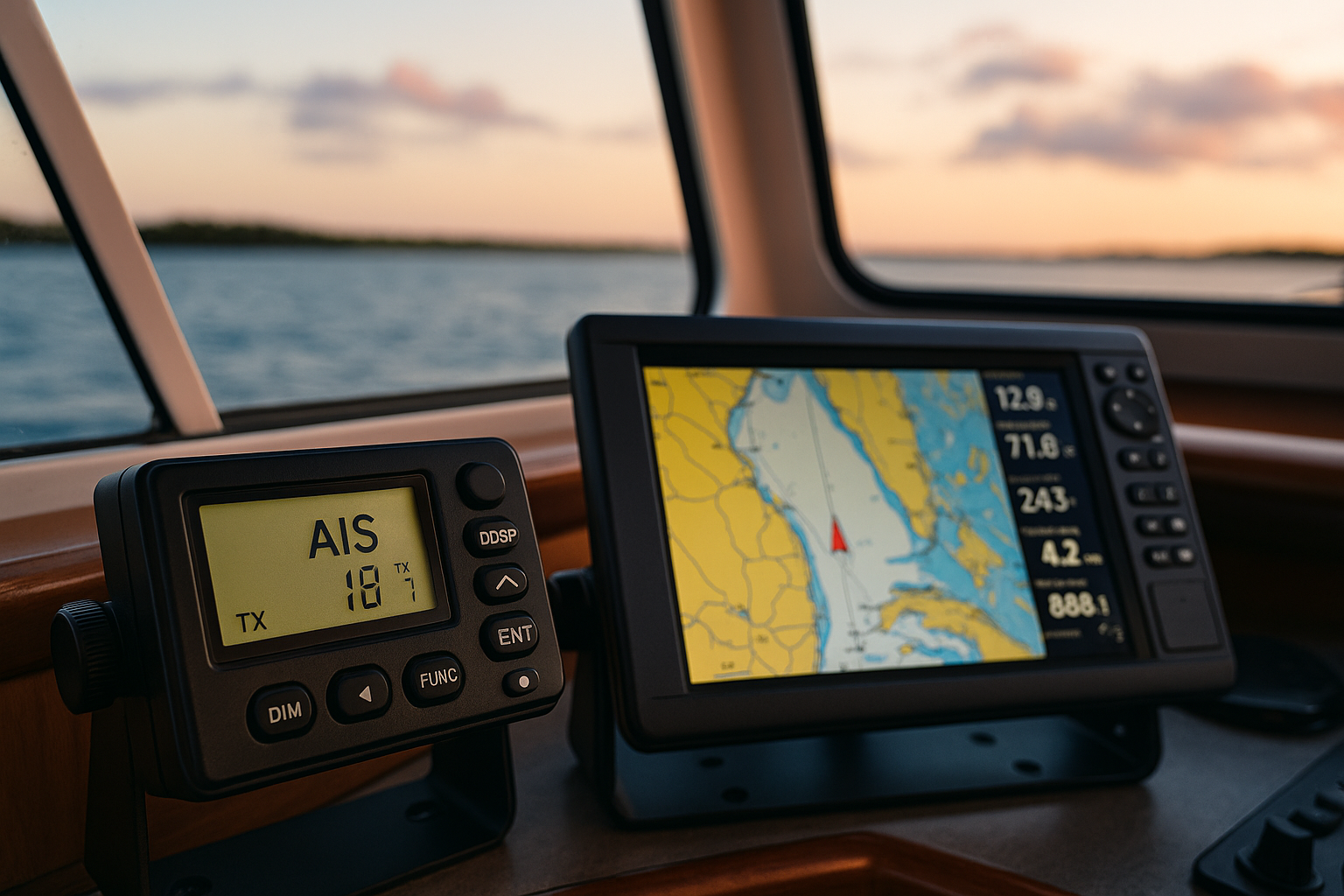
The Automated Identification System (AIS) has become an essential safety feature for recreational and commercial vessels over the last decade. Initially mandatory only for large commercial vessels to avoid collisions, AIS has become increasingly popular among private boaters to enhance situational awareness and security on the water. Here’s why you should care about AIS and what the new Bahamas AIS Law means for boaters.
Why AIS Matters for Boaters
Enhanced Safety & Situational Awareness
AIS allows boaters to track nearby vessels, including those that may not have radar. This reduces the risk of collisions, especially in crowded or poorly lit areas.
Search & Rescue Tool
In the event of a distress situation, activated AIS transponders help Search and Rescue (SAR) teams locate vessels quickly. This feature has saved countless lives, especially in emergency situations.
Marine Security & Monitoring
Many marine facilities use AIS data to monitor the movement of boats in and out of docks, ensuring the safety and security of vessels. It also helps enforce anchoring rules, adding an extra layer of protection for boat owners.
Regulatory Pressure
As coastal nations tighten their safety standards, AIS is becoming mandatory for smaller crafts. It’s not just a safety feature anymore; it’s increasingly becoming a legal requirement for boaters.
New Bahamas AIS Requirement: AIS for Boats Over 50 ft
Starting July 1, 2025, the Bahamas Port Authorities (Amendment) Bill mandates that all foreign vessels over 50 feet when entering, docking, traversing, or passing through Bahamian waters must be actively broadcasting via AIS. The penalty for non-compliance? A hefty $1,000 fine.
Clarification on Smaller Boats
Initial drafts of the law suggested that AIS would apply to all boat sizes. However, a legislative amendment narrowed the requirement to vessels 50 feet and above.
What This Means for SOMI’s Boaters
- Check your boat’s length:
If your vessel is 50 feet or longer, you are required to install and actively use an AIS transceiver when in Bahamian waters. - Prepare for installation:
AIS transceivers, like Garmin’s AIS 800, typically cost between $800 to $1,200, plus installation fees. - Be aware of enforcement and fines:
The $1,000 penalty applies per infraction. Ensure that your AIS is constantly broadcasting while in Bahamian waters to avoid costly fines. - Smaller vessels are not exempt:
While boats under 50 feet are not required by law to install AIS, having it onboard is still strongly recommended for safety purposes. - Plan your cruising itinerary:
The new requirement could influence your cruising route to the Bahamas and your marine gear checklist, especially if your boat is close to 50 feet in length.
Quick Summary
Vessel Length | AIS Required in Bahamas | Fine if Non-compliant |
50 ft + (foreign) | Yes (actively ON) | $1,000 |
Under 50 ft | No | Not Required |
Best Practices for Preparing Your Boat
- Choose a reliable AIS transceiver compatible with your VHF system and charts.
- Get professional installation to ensure proper antenna placement and power integration.
- Register and test your AIS – verify your MMSI is programmed and ensure your AIS transceiver broadcasts properly.
- Monitor AIS while outside the Bahamas – make sure your AIS activates as you enter Bahamian waters and stays operational throughout your trip.
- Inspect your AIS routinely – regular maintenance checks help prevent last-minute failures or surprises.
Final Thoughts
The Bahamas’ new AIS law highlights the growing global emphasis on marine safety, transparency, and environmental awareness. For SOMI boaters, adhering to the new regulation means:
- Smooth, worry-free cruising
- Avoidance of fines (up to $1,000 per infraction)
- Enhanced personal and marine safety
Even if your boat is under 50 feet, installing AIS provides many additional safety benefits. It’s definitely worth considering as part of your navigation and safety upgrades.
Stay compliant, stay safe, and enjoy smooth sailing ahead!
Contact Us for More Information on AIS Systems
For assistance with AIS installation, upgrades, or any other marine safety equipment, Solution One Maritime is here to help!
Write us at – Email: [email protected]