If You Had 60 Seconds to Leave the Boat, What Goes with You?
I’ve thought about that question more times than I can count. You’d be surprised how fast things can go wrong out there. A fire is below the deck. Water coming somewhere shouldn’t. The engine quits and the weather turns before you can figure out what to do next. When that happens, you don’t really have time to think. You just go.
That’s why we keep a ditch bag on every vessel. It’s the one bag you grab when you’re done with the boat.
What Is a Ditch Bag, anyway?
Simple version it’s a waterproof bag you pack ahead of time with everything you’d need if you had to leave the boat right now and wait for rescue.
Not your tackle bag. Not your cooler. Not a backpack; you throw stuff into five minutes before you leave the dock. A real ditch bag is packed deliberately, stored somewhere you can reach it fast, and every person on board knows exactly where it is.
The Gulf of America doesn’t care how long you’ve been boating. Conditions change, and they don’t always give you much warning. We’ve seen it happen to experienced people. A good ditch bag buys you time until help gets there.
What Goes in It
I’ll just go through it the way I’d explain it to someone standing in the shop.
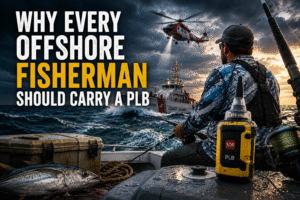
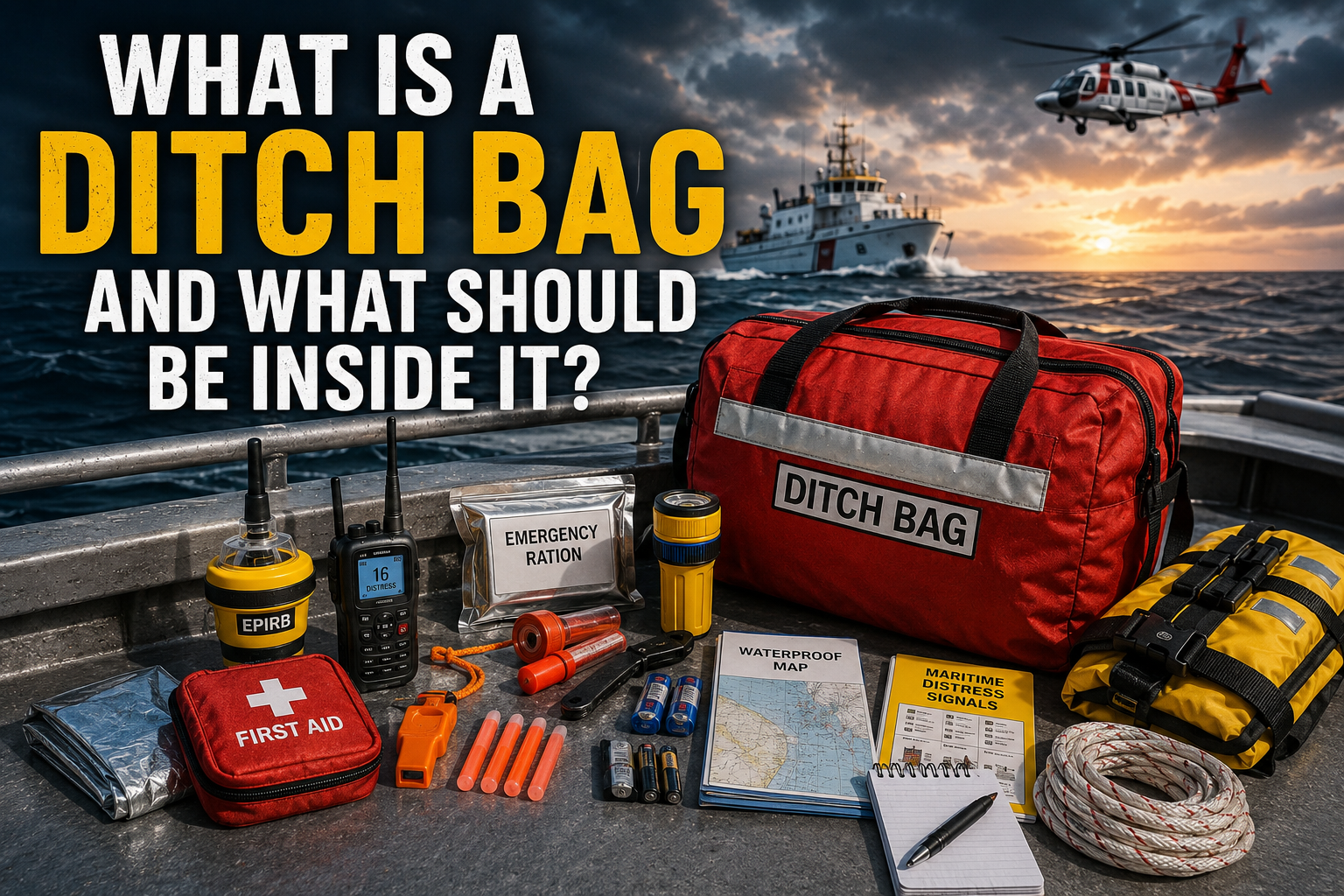
- Signaling gear first: This is the stuff that gets you found. Handheld flares, a signal mirror, a whistle. If you have a PLB, that goes in too or clip it right to your life jacket, so it’s always on you. Everything in this category needs to have a current date on it. An expired flare isn’t just useless; it’s a false sense of security.
- A handheld VHF radio: The fixed radio on your boat stays on your boat. If you’re in the water or on a life raft, that doesn’t help you. A waterproof handheld VHF gives you a way to talk to the Coast Guard and nearby vessels. Charge it before every trip and throw a spare battery pack in the bag too.
- Something to tell you where you are: A small GPS unit or even a good waterproof compass. Your phone might work if it stays dry, but I wouldn’t count on it being the main thing. Once you’ve activated your beacon, knowing your position still matters.
- First aid: Nothing fancy. Wound dressings, antiseptic wipes, medical tape, gloves, and whatever prescriptions your crew depends on. Check the expiration dates when you check everything else. Takes two minutes.
- Water and food: People forget this more than you’d think. Sealed water pouches the kind rated for emergency use to hold up in heat and last for years. Throw in a few energy bars. You might be out there longer than you expected. It happens
- Something for the sun and the cold: I know, you’re thinking this is Florida, how cold can it get.. But if you’re wet, in the wind, at night, it gets cold enough to matter. A thermal blanket takes up almost no space. A small tarp or emergency bivvy is worth having too. Spend two hours in the water at night and you’ll understand why this is in the bag.
- A few extras: A good knife with a line cutter on it. Waterproof matches or lighter. A small flashlight. Some cable ties and a roll of duct tape. Laminated copies of your vessel paperwork and emergency contacts. None of this stuff is heavy. Together, it makes a real difference.
Where to Keep It
Right where you can grab it on the way out. Near the helm, in a cockpit locker you can open with one hand, clipped near the companion way somewhere obvious.
And tell your crew. If something happens to you and someone else has to grab the bag, they shouldn’t have to search for it. That’s not a small thing.
Check It Once a Season
Flares go out of date. Batteries are worn down. Food and water have expiration dates. First aid supplies, too. Pull the bag out at the start of every season and go through it.
I’m not going to tell you it’s a big project because it isn’t. Half an hour, maybe. But it’s one of those half hours that actually matters.
FAQ
- What is a ditch bag used for?
It’s what you grab when you have to leave the boat in an emergency. It’s got everything you need to signal for help, stay hydrated, treat injuries, and hold on until rescue arrives. The idea is simple you pack it before you ever need it, so when you do need it, it’s ready. - What’s the most important thing to put in a ditch bag?
Signal gear. Flares, PLB or EPIRB, and a handheld VHF radio. If nobody can find you, the rest of what’s in the bag just keeps you alive longer while you wait. Getting found is a priority. - How big should a ditch bag be?
Big enough to hold everything, yet easy to grab and go. Waterproof, ideally buoyant or with a flotation collar, and a bright color like orange or red so it’s easy to spot in the water if dropped. - Does a ditch bag replace an EPIRB?
No, An EPIRB is mounted on the vessel. A ditch bag is what you carry with you when you leave it. They do different jobs. The EPIRB stays with the boat; your bag and your PLB come with you. If you’re running offshore, you really want both. - How often should I update what’s inside?
At the start of every season, go through the whole bag. Check expiration dates on flares, food, water pouches, and first aid supplies. Charge or replace batteries. If you used something during the season, replace it before you put the bag away. Don’t wait until next year.