Your Life Raft Looks Fine. But Is It Actually Ready?
That’s the question a lot of Florida boaters never ask until it’s too late. Life rafts sit in their containers for months, sometimes years, without anyone checking what’s happening inside. And when inspection day comes, the results can be a real eye-opener.
Failing inspection doesn’t necessarily mean your raft is ready for the trash. It means something wasn’t maintained properly. But offshore, that difference matters more than anywhere else.
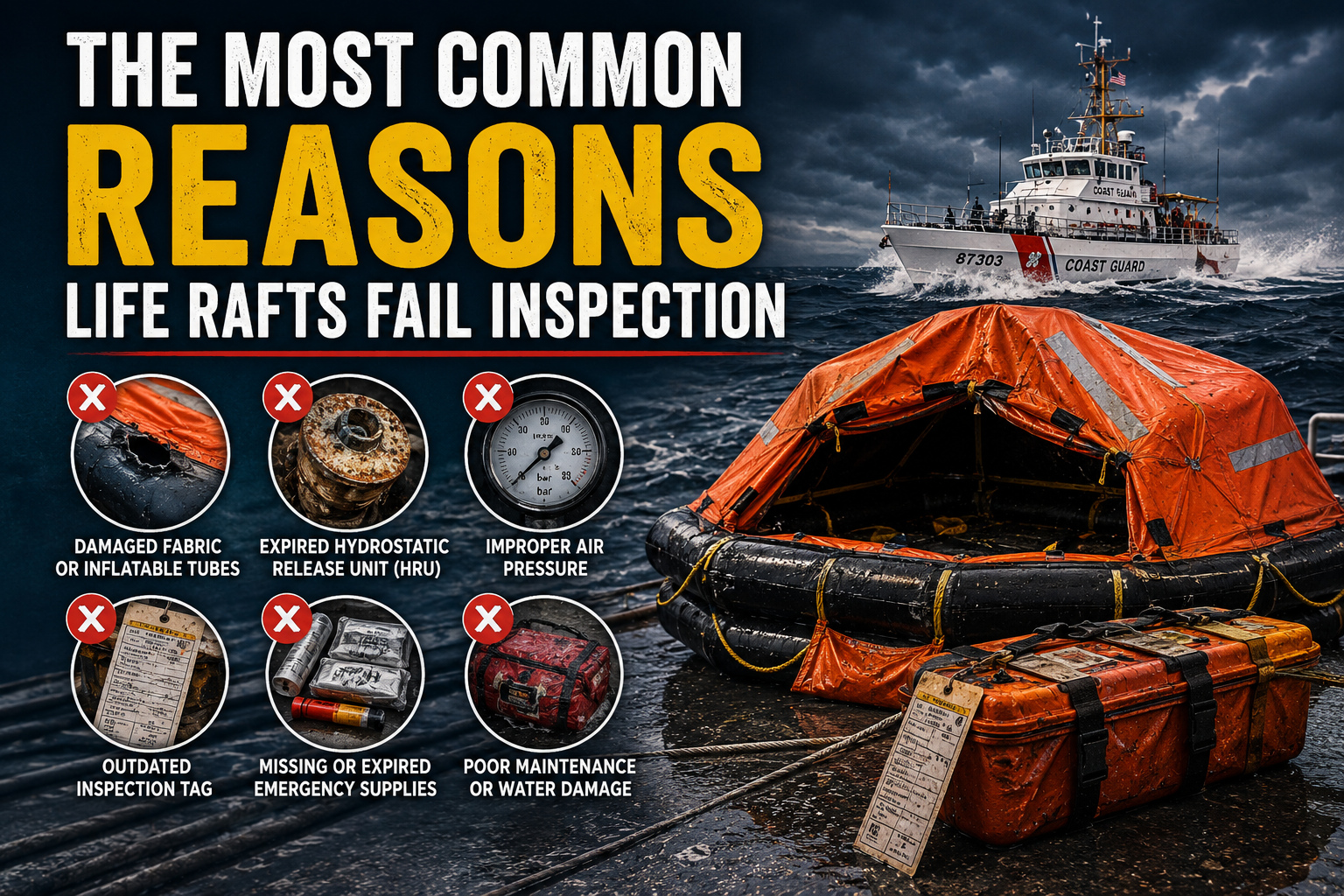
Expired Service Dates Are the Number One Problem
This one comes up constantly. Manufacturers require life rafts to be serviced at regular intervals, usually every one to three years depending on the brand and model. A lot of boat owners miss that window. Sometimes for a few months. Sometimes, by year.
Here’s the thing. An un-serviced raft isn’t just a compliance issue. Seals degrade. Inflation mechanisms corrode. CO2 cylinders lose pressure. The raft may look identical from the outside, but the internal components have been quietly deteriorating the whole time.
Trust me, inspectors catch this immediately. And there’s no workaround the raft goes back for service before it passes.
Hydrostatic Release Units That Are Past Their Date
Hydrostatic release units are small but critical. They’re designed to automatically release the life raft from the vessel if it sinks below a certain depth. When they work correctly, the raft deploys on its own even if the crew can’t reach it.
The problem is that hydrostatic release units have their own expiration dates. Most are only rated for two years. After that, mechanical reliability can’t be guaranteed. Inspectors check every single time, and an expired unit is an automatic failure.
It’s a cheap fix compared to what’s at stake. But a surprising number of boats show up with units that expired a year or two ago and nobody noticed.
Damaged or Missing Cradles and Securing Straps
Cradles hold the raft container securely to the vessel. Securing straps keep it from shifting during rough conditions. Both take a beating from saltwater, UV exposure, and Florida heat over time.
Cradles crack. Metal fittings corrode. Securing straps fray or lose their tension. When these components fail, the life raft can shift during transit or worse — detach at a critical moment.
Inspectors don’t just look at the raft itself. They check the entire mounting system. A raft in perfect condition still fails if the cradle is cracked, or the securing straps are worn through. The whole setup has to work together.
Water Damage and Moisture Inside the Container
This one surprise people. Life raft containers are designed to keep moisture out, but the seals aren’t invincible. Hairline cracks, impact damage, or just age can allow water to work its way in.
Once moisture gets inside, it starts affecting everything, the inflation cylinder, the fabric, and the packed emergency equipment inside the raft. Mold and corrosion can develop without any visible sign on the outside of the container.
Florida conditions make this worse. Humidity is relentless here. Boats stored outdoors face constant exposure. Inspectors’ open containers look specifically for this kind of damage, and it fails more rafts than most people expect.
Incomplete or Outdated Emergency Equipment Packs
Most life rafts come with a packed survival kit inside, flares, water rations, a first aid kit, signaling equipment, and sometimes medical alert devices. The contents have expiration dates too.
Outdated flares are a common failure point. So are expired water packets and first aid supplies. Life alert devices and other signaling gear need to be functional within their service window.
Inspectors go through the pack item by item. If even one component expires or is missing, the raft doesn’t pass. It’s not enough for the raft to be in good shape. Every piece of emergency equipment inside must be current and ready.
Neglecting Inspections After Buying a Used Boat
Buying a used vessel is exciting. But used boats sometimes come with life rafts that haven’t been serviced in years. The previous owner may not have kept records. The service sticker may fade or be missing entirely.
Don’t assume the raft is good because it came with the boat. Get it inspected right away. We see this situation regularly, and it’s almost always cheaper to address it earlier than to deal with a raft that fails right before a trip.
If there are no service records, treat it like it’s overdue. Because it probably is.
Florida Conditions Accelerate Every One of These Problems
Heat, salt air, and UV exposure don’t take days off in Florida. Life rafts stored on exposed deck positions face constant environmental stress. Containers fade and become brittle. Straps weaken faster than in cooler climates. Hydrostatic release units corrode quicker near the coast.
That’s why annual inspections make more sense here than anywhere else. The service interval recommendations from manufacturers were written for average conditions. Florida isn’t average.
A well-maintained life raft is one of the most important pieces of safety gear on any offshore vessel. Keep it current. Keep it documented. And don’t wait for a close call to find out it wasn’t ready.
FAQs
- How often should life rafts be inspected in Florida?
Most manufacturers recommend servicing life rafts every one to three years. Given Florida’s heat, humidity, and saltwater exposure, annual inspections are a smart choice. Check your specific manufacturer’s guidelines and keep a written service log onboard. - What happens if a hydrostatic release unit fails inspection?
An expired or damaged hydrostatic release unit is an automatic inspection failure. The unit needs to be replaced before the life raft can be certified. Replacement units are relatively inexpensive compared to the cost of a full raft replacement, so it’s worth staying on top of expiration dates. - Can I check my life raft between professional inspections?
You can do a visual check look for damage to the container, cradles, and securing straps. But the internal inspection requires a certified service facility. Don’t open the container yourself unless it’s a real emergency. Opening it requires repacking and re-certifying a professional. - What emergency equipment should be inside my life raft?
Standard packs include flares, water rations, a first aid kit, a bailer, a repair kit, a signaling mirror, and sometimes medical alert devices or life alert devices depending on the vessel’s class and regulations. All items have individual expiration dates and must be current to pass inspection. - Where can I get my life raft inspected in Florida?
Solution One Maritime is a USCG-approved service center in Largo, FL, certified to service REVERE, VIKING, and ACR equipment. They service life rafts from Alabama to Key West and are one of the most experienced facilities in the Southeast. You can learn more at solutiononemaritime.com.