You’re Twenty Miles Out. Your Phone Has No Signal. Now What?
That’s not a worst-case scenario for Florida offshore anglers. It happens. Engines quit. People go overboard. Weather rolls in faster than the forecast predicted. And when something goes wrong out there, the difference between a rescue and a tragedy often comes down to one small device clipped to your life jacket.
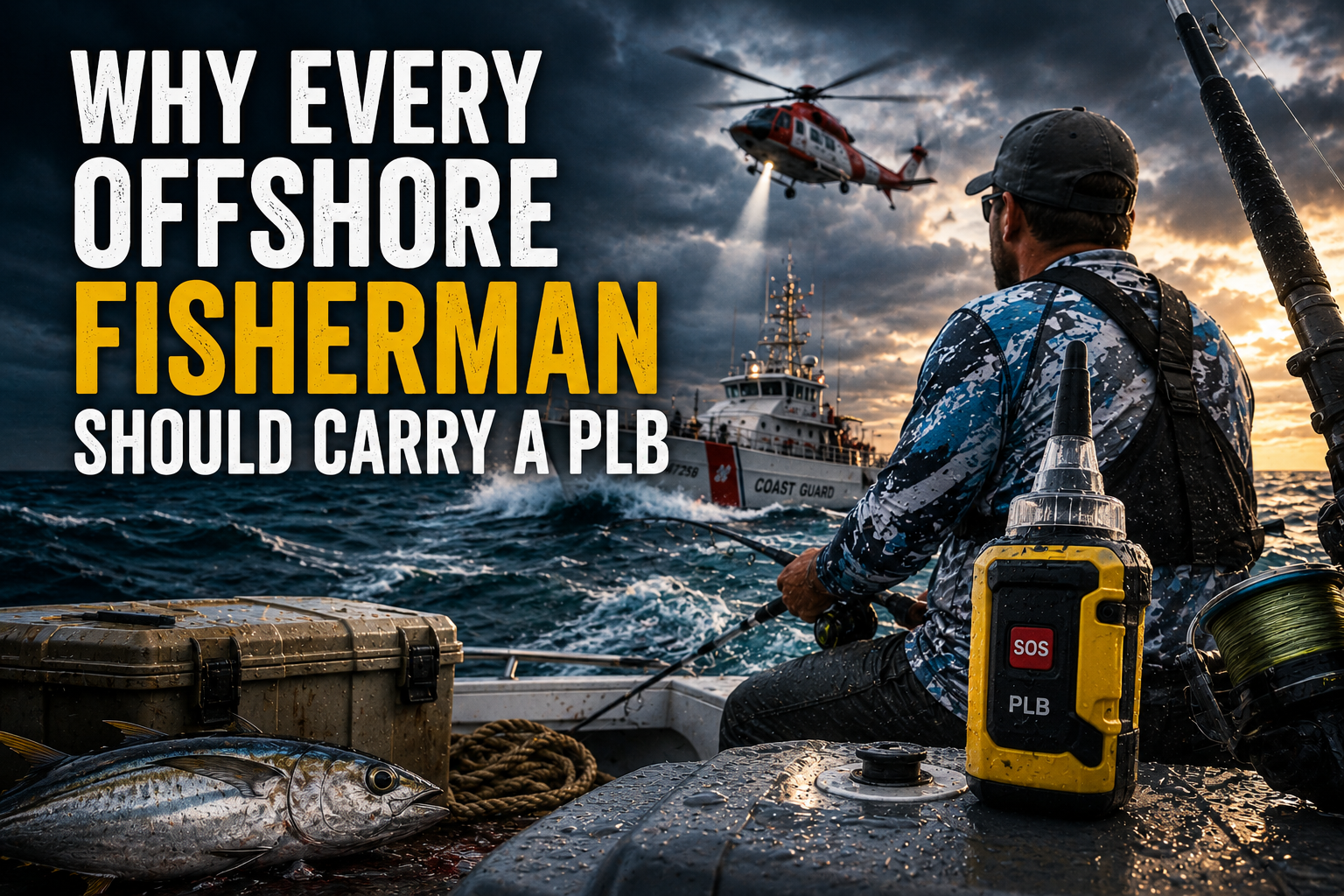
A PLB (Personal Locator Beacon) is that device. And if you’re running offshore in Florida without one, you’re taking a risk you don’t need to take.
What a PLB Actually Does
Let’s keep this simple. A PLB sends a distress signal directly to a network of search and rescue satellites the moment you activate it. No cell tower. No Wi-Fi. No app needs a data connection. It works anywhere deep in the Gulf of America, far off the Atlantic coast, or anywhere else you point to the bow.
The signal transmits your exact GPS coordinates to rescue teams within minutes. That’s rapid rescue in the most literal sense. Instead of searching for teams covering hundreds of square miles, they know almost exactly where to go. That changes math on survival time dramatically.
And here’s the part people don’t fully appreciate until they need it. A PLB doesn’t care how far offshore you are. Global coverage means the system works whether you’re 10 miles out or 100. The satellite network doesn’t have gaps in Florida waters. That peace of mind is real, and it’s worth every dollar.
Why Offshore Fishermen Specifically Need One
You can make the case for a PLB on any vessel. But offshore fishing creates a specific set of conditions that make it especially important.
Anglers often fish alone or in small crews. You might be running to a spot 30 miles offshore before sunrise, in the dark, before anyone onshore even knows you’ve left the dock. If something happens on a fall overboard, a medical emergency, an engine fire you may not have a second person to call for help.
Even with a VHF radio onboard, a man overboard situation can put you in the water without access to the boat. The radio stays on the boat. Your PLB stays on you. That’s the difference between being found and not being found.
Florida Gulf conditions also have a way of surprising even experienced captains. Squalls build fast. Visibility can drop to near zero. A PLB works through all of it. Storm, fog, night none of those things affect the satellite signal. It transmits regardless of conditions.
The Registration Step You Cannot Skip
Buying a PLB is the first step. Registering for it is what makes it actually work for you.
Every PLB must be registered through NOAA’s free beacon registration database at beaconregistration.noaa.gov. When your beacon activates, rescue agencies immediately pull your registration for your name, your vessel details, and your emergency contacts. That information helps them confirm the signal is real and helps them find you faster.
Registration is completely free. No payment is required. If you ever receive a message asking for money to register a beacon, report it to [email protected] that’s a scam.
Update your registration any time your contact information or vessel details change. Outdated registration slows things down when speed is everything.
Size and Weight Are Not Excuses
One of the most common reasons anglers skip the PLB is convenience. It feels like one more thing to carry, one more thing to clip on, one more thing to remember.
Trust me, that thinking fades fast once you’ve seen how small modern PLBs actually are. Most fit in a shirt pocket. They clip directly to a life jacket or a gear bag. You won’t notice it’s there during a normal trip. But if things go sideways, you’ll be very aware of exactly where it is.
Battery life on a quality PLB runs 24 hours or more of continuous transmission. That’s more than enough time for rapid rescue teams to reach you in Florida waters. And the battery doesn’t drain normal storage; these devices sit ready for years between replacements as long as you stay on top of the expiration date.
It’s Not Either-or with Your Other Safety Gear
A PLB doesn’t replace your VHF radio. It doesn’t replace flares or your EPIRB if you carry one. Think of it as the last line of personal safety for the device that works for you specifically if everything else fails or becomes unreachable.
Experienced offshore captains carry multiple layers of emergency communication. The PLB is the personal layer. It goes where you go. If you’re separated from the boat, it’s the one piece of emergency equipment that stays in play.
That’s why working anywhere isn’t just a selling point. It’s the whole value of carrying a PLB in the first place.
Don’t Wait for a Close Call to Buy One
A lot of anglers add safety gear after something nearly goes wrong. That’s backward. The time to have a PLB is before you ever need it already registered, already clipped on, already ready.
Florida offshore fishing is one of the best things about living here. The runs to the snapper grounds, the early morning grouper trips, the pelagic season out in the blue water. All of it is worth protecting with the right gear.
A PLB is a small investment for a very large return in your life, and the peace of mind of everyone waiting for you back at the dock.
FAQ
- What is a PLB, and how does it work?
A PLB (Personal Locator Beacon) is a handheld emergency device that sends a distress signal directly to search and rescue satellites when activated. It transmits your GPS coordinates to rescue teams without needing cell service or Wi-Fi. It works anywhere, including far offshore, where no other communication method is reliable - Do I need to register for my PLB?
Yes, registration is required and it’s free. Register at beaconregistration.noaa.gov. Registration links your beacon to your personal details, vessel information, and emergency contacts. Without it, rescue teams have significantly less information when your signal is activated. Never pay anyone to register a beacon report payment request to [email protected]. - How is a PLB different from an EPIRB?
An EPIRB is mounted on the vessel and can activate automatically if the boat sinks. A PLB is personal if you wear it or clip it to your gear. If you go overboard and the boat drifts away, your PLB keeps transmitting from wherever you are. For offshore fishing, carrying both is the safest approach. - How long does a PLB battery last?
Most PLBs provide at least 24 hours of continuous transmission once activated. In standby storage, the battery lasts several years. Always check the expiration date before offshore trips and replace the battery before it lapses; an expired battery can fail when you need it most. - Can a PLB work in bad weather or at night?
Yes. A PLB transmits directly to satellites regardless of weather, visibility, or time of day. Rain, fog, darkness, none of those conditions interrupt the signal. That’s one of the core reasons global coverage matters for offshore anglers in Florida, where conditions can change without warning.