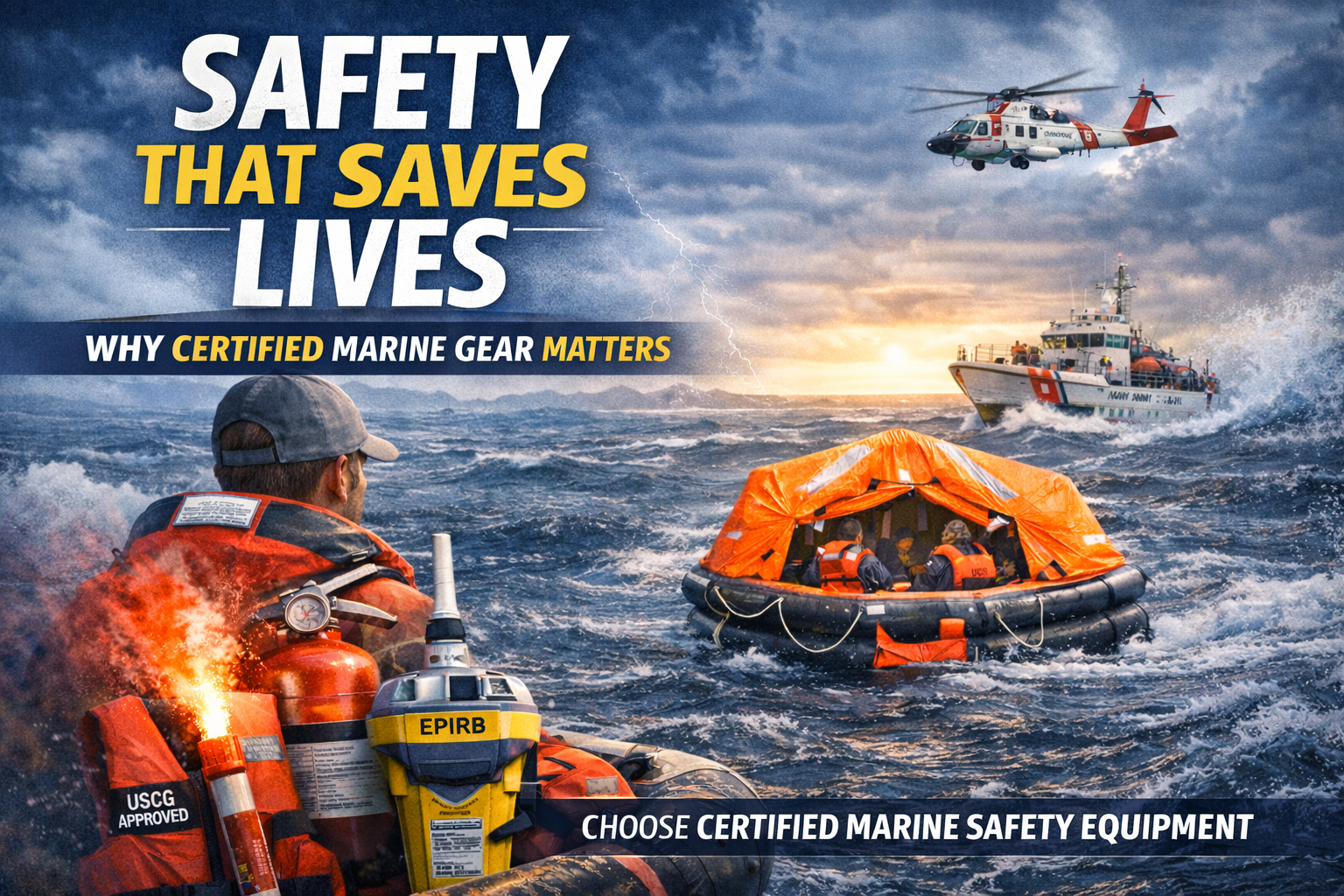
If you spend time on the water, you already know one thing. Conditions can change fast. A calm morning can turn rough before you even see it coming. That’s why certified marine safety equipment isn’t just a recommendation. It’s protection you can trust when seconds matter.
Boating gives you freedom-open water and fresh air. A sense that nothing can touch you. But when something goes wrong out there, the right gear makes all the difference – and that’s where smart decisions today protect lives tomorrow.
Why Not All Marine Safety Gear Is the Same
Let’s be honest. Not all safety gears are built the same. Some products look fine on a shelf, but they haven’t been tested to meet strict standards. When you choose certified marine safety equipment, you’re choosing products that meet federal guidelines and real-world performance requirements. That means life jackets that actually keep someone afloat the right way. Flares that ignite when you need them. Fire extinguishers that work under pressure.
Understanding USCG Approved Safety Gear Requirements
It’s easy to overlook the importance of USCG approved safety gear until you need it. The U.S. Coast Guard sets clear standards for what equipment must be on board. Those standards exist because they save lives every year. When you carry proper gear, you’re not guessing. You’re complying with proven safety rules.
How Marine Safety Compliance Helps Avoid Fines
Here’s the part many boaters don’t think about. Fines are real. Penalties add quickly. During inspections, officers look for required items, expiration dates and compliance labels. If you’re missing something or using outdated equipment, you could face citations. That’s where proper marine safety compliance protects both your crew and your wallet.
Why Certified Gear Makes Boat Inspections Easier
We’ve seen it firsthand. A simple inspection turns stressful when required gear is expired or non-compliant. But when your boat carries certified marine safety equipment, inspections move faster and smoother. You show that you take responsibility seriously. That confidence matters.
Why Certified Marine Equipment Matters in Emergencies
Now let’s talk about emergencies. No one wants to picture it, but preparation changes outcomes. In rough weather, a reliable life raft can mean survival. That’s why certified equipment is critical for offshore travel. Certified equipment standards go beyond basic requirements and focus on high-performance safety under extreme conditions.
Protecting Passengers, Crew and Commercial Operations
When you use certified marine safety equipment, you build layers of protection. Your decisions that protect passengers, crew members and even your business reputation if you operate commercially. That’s another point worth mentioning. If you run a charter, fishing vessel or commercial craft, marine safety compliance is not optional. It’s mandatory. Insurance companies also pay attention. Using USCG approved safety gear can help you to avoid liability issues after an incident. That matters more than most people realize.
Why Certification Labels and Testing Matter
Some boaters assume all life jackets are equal. They’re not. Certified flotation devices are designed with buoyancy ratings and performance testing. That’s part of why certified marine safety equipment carries official markings. Those labels show that the product has passed testing. It isn’t guesswork. It’s a documented performance.
The Hidden Cost of Cheap Marine Safety Gear
We often tell customers this simple truth. Cheap gear is expensive in the long run. Saving a few dollars today can cost you in fines, repairs, or even lives. Worse, it could cost lives. When you choose reliable equipment, you’re investing in peace of mind.
How Often You Should Inspect Marine Safety Equipment
You might wonder how often gears should be inspected. The answer depends on usage, or the equipment type, but regular checks are essential. Expired flares, corroded fire extinguishers, and worn-out inflatable PFDs won’t help during an emergency. Staying current with marine safety compliance means reviewing your equipment before every major trip. . EPIRB registrations must be renewed with NOAA and the HRU must be replaced every 2 years. Subject to manufacturer (check the battery expiration label), it must get new batteries every 5-10 years. Also, self-test it every month. Subject to pleasure or commercial craft and age of life raft, you must recertify your life rafts every 1-3 years (service intervals are set by the Coast Guard).
Why Professional Marine Safety Guidance Helps
Here’s where professional guidance helps. Working with a trusted supplier ensures you’re getting authentic USCG approved safety gear and properly rated products. That’s why many boaters turn to specialists here at Solution One Maritime who understand regulations inside and out.
If you’re unsure where to begin, take a moment to review Certified marine safety gear resources. You’ll see how structured safety planning protects vessels of every size. Having the right partner simplifies everything.
Durability and Performance of Certified Marine Gear
Another benefit of certified marine safety equipment is durability. Certified products undergo stress testing for saltwater exposure, extreme temperatures, and impact resistance. That testing ensures performance when conditions are less than ideal.
Why Reliable Signaling Equipment Is Critical Offshore
Think about offshore navigation. When visibility drops, signaling equipment becomes critical. Certified equipment provides enhanced visibility and reliability during distress situations. Those brighter flares and more durable life rafts are built for serious environments.
Why Smart Boaters Go Beyond Minimum Requirements
Even recreational boaters benefit from exceeding minimum requirements. You may not legally need certain offshore equipment for nearshore trips, but added protection never hurts. Smart captains prepare for the unexpected.
Simplifying Documentation and Compliance Checks
Let’s also address documentation. When your vessel carries compliant gear, paperwork becomes easier. Inspections, audits, and renewals move faster. Clear labeling from USCG approved safety gear reduces confusion. Everything is straightforward and visible.
Enjoy Boating with Confidence and Safety
At the end of the day, boating should be enjoyable. You head out to relax, fish, cruise, or explore. Worrying about penalties or safety risks ruins that experience. Investing in certified marine safety equipment removes uncertainty.
We’re not talking about overloading your boat with unnecessary gear. We’re talking about smart, compliant protection. Reliable life jackets. Properly rated extinguishers. Up to date signaling devices.
When you commit to strong marine safety compliance, you protect your passengers and your future boating plans. No one enjoys surprise fines. No one wants to face preventable emergencies.
Final Takeaway: Safety Equipment Saves Lives
So, here’s the takeaway. Safety isn’t an expense, It’s preparation. The right equipment saves lives, reduces stress, and keeps you on the right side of regulations.
If you’re reviewing your boat setup this season, now is the time. Check expiration dates, verify certification labels and upgrade where needed. Because when the water turns rough, you’ll be glad you chose gear that was built to perform.
FAQ
Why is certified marine safety equipment important?
Certified marine safety equipment meets strict testing standards. It performs reliably during emergencies and helps protect lives on the water.
What happens if my boat doesn’t have USCG approved safety gear?
You can face fines, penalties, or failed inspections. Non-compliant gear may also increase liability if an accident occurs.
How often should I check my marine safety equipment?
You should inspect it before every major trip and review expiration dates regularly. Staying updated ensures compliance and emergency readiness.