An afternoon on the water can change in seconds. One moment you’re paddling along the coast. The next, waves take control. That’s what makes this story so hard to read, and impossible to ignore.
A Day on the Water That Turned Into a Search
More than a week after a kayak capsized off a Florida beach, the body of 18-year-old was found on Clearwater Beach, named Elias Guillermo Lara Vargas. He had gone kayaking near Honeymoon Island State Park with two others when conditions shifted. Waves pushed two of the kayakers farther from shore. Their vessels capsized. One of them survived.
Nineteen-year-old Savannah Ozer managed to call for help. A Dunedin Fire Rescue boat reached her in time, throwing a rescue ring and pulling her onboard. She was treated for hypothermia and later released from the hospital. First responders called her rescue lucky, given the wave height and rough conditions. Elias was not as fortunate.
Despite a wide search effort, including the U.S. Coast Guard covering nearly 290 square miles by air and sea, he could not be located. By the following evening, the active search was suspended. More than a week later, his body was found by someone walking along the beach.
The thought that may come to your mind is -if enough marine safety gear had been present, this outcome might have been different. Luck saved one life that day. Preparation might have saved another.
When Conditions Change, Preparation Is What Stay
Kayaking often feels simple. Quiet. Close to shore. That’s why many people underestimate how quickly things can go wrong. Waves don’t care about experience. Cold water doesn’t wait for strength to kick in.
This incident highlights why kayaking safety should never be treated casually. Even near popular beaches, conditions can change fast. Wind picks up. Swells build. Distance from shore increases before you realize it.
Proper boating safety equipment gives people options when plans fall apart. It buys time. It improves visibility. It gives rescuers something to work with.
In this case, a rescue ring and a timely call made all the difference for one kayaker. For the other, there was no second chance
The Role Marine Safety Gear Plays in Survival
When someone capsizes, the clock starts immediately. Cold water drains energy fast. Panic speeds it up. Without flotation or signaling tools, even strong swimmers struggle.
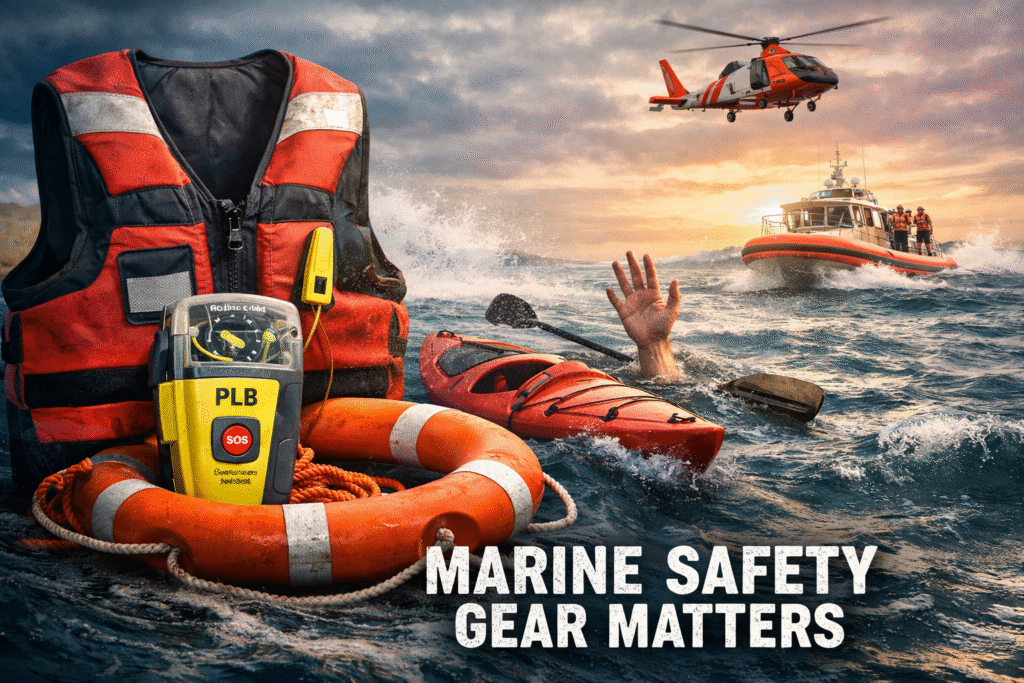
This is where marine safety gear matters most. Not as an accessory, but as a survival tool.
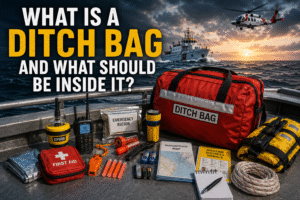
Life jackets designed for paddlers help keep heads above water when exhaustion sets in. Whistles and lights make it easier for rescuers to locate someone in choppy seas. Bright colors and reflective patches improve visibility, especially in low light.
Personal locator beacons and waterproof communication devices give rescuers a starting point. Instead of searching miles of open water, teams can focus their efforts.
Good kayaking safety planning includes wearing the gear, not stowing it. Emergencies don’t give warnings. What you’re wearing is what you’ll have.
Why Rescue Isn’t Always Enough
Without clear signals or precise locations, searches grow larger and harder. Time works against everyone involved. This is true whether you’re kayaking, boating, or paddleboarding.
That’s why boating safety equipment isn’t just about rules or recommendations. It’s about making rescue possible before conditions and fatigue take over.
We often hear people say, “I was lucky,” and sometimes luck shows up, but luck doesn’t work for everyone. Preparation increases the chance of survival.
A Hard Lesson
This tragedy is not about blame. It’s about awareness.
Having the right marine safety gear doesn’t guarantee survival. Nothing does. But it stacks the odds in your favor.
Every kayaker, boater, and paddler should pause and ask a simple question before launching. If something goes wrong, will I be seen? Will I be heard? Will I float?
Strong kayaking safety habits and properly chosen boating safety equipment turn uncertainty into confidence.
Final Thought
Not every accident can be prevented. But many outcomes can be changed.
Preparation isn’t fear. It’s responsibility, and on the water, it saves lives.