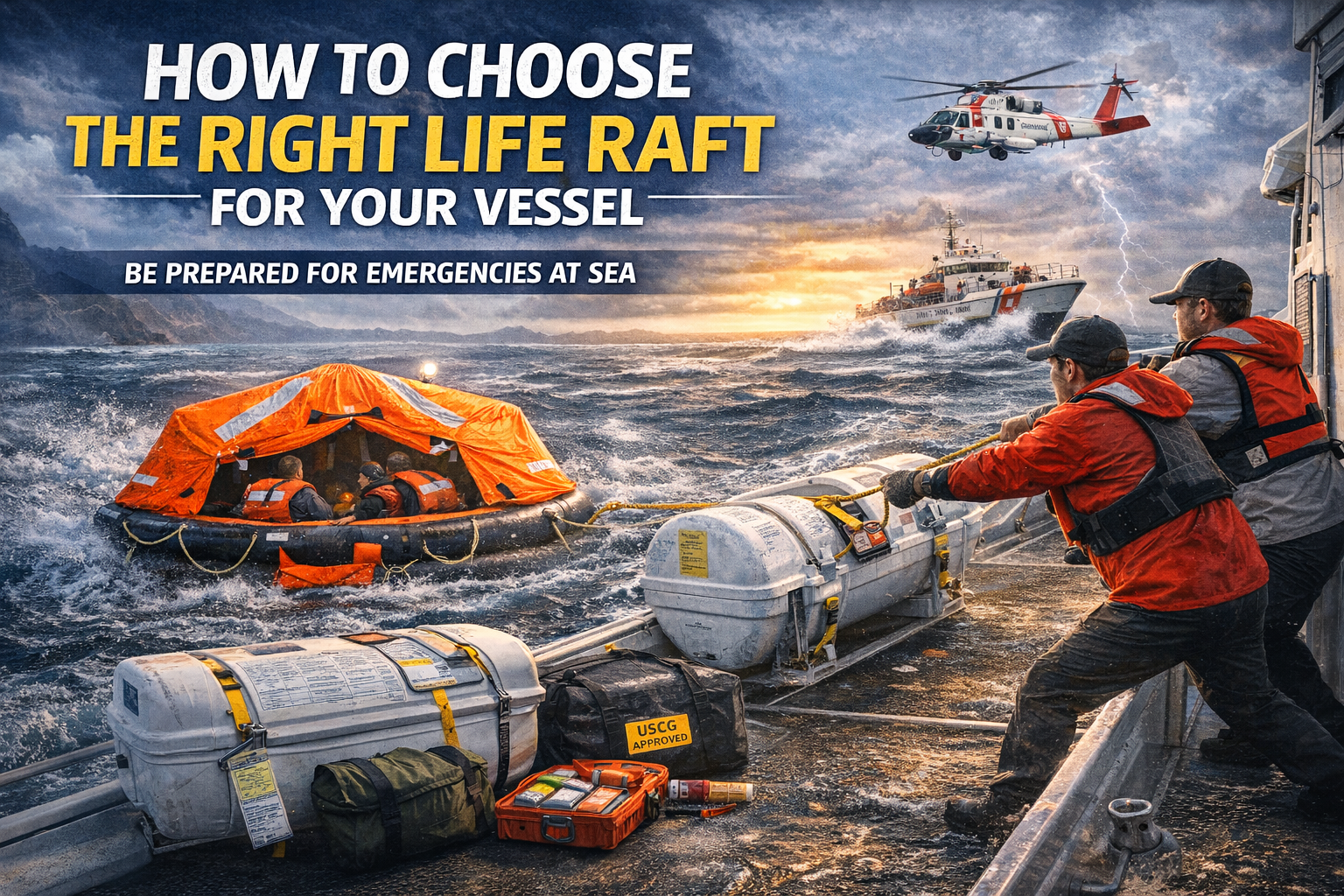
Out on open water, confidence matters. You can’t control the weather and you definitely can’t control every mechanical issue. But you can control what happens after an emergency. Choosing the right life raft for your vessel can make a world of difference in outcomes.
Start with the Right Size (And Then Go Bigger)
When boat owners start shopping for a life raft for their vessels, the first thing they usually ask is, “What size do I need?” It sounds simple, but this is where most of the confusion begins. Rafts are rated by capacity – four-person, six-person, eight-person and so on.
The mistake people make is buying the smallest option that technically fits their crew.
In real emergencies, space becomes critical. You may have an injured passenger. You may need room for extra supplies. Stress levels will already be high. We usually recommend sizing up if your vessel can accommodate it. If you typically carry four people, consider a six-person raft. That little bit of extra room can make a big difference.
Choosing the right raft for your vessel starts with honest math, not wishful thinking.
Coastal vs. Offshore: Know Where You Really Boat
Not all rafts are built for the same conditions. Coastal cruising and offshore passages demand very different designs.
If you operate close to shore and within quick rescue range, a coastal-rated raft may be sufficient. These are lighter and easier to store. They’re a solid choice for many recreational boaters.
If you travel offshore, cross long distances or operate commercially, you’ll need something more robust. Offshore models include insulated floors, stronger canopy systems and larger ballast pockets for stability in heavy seas.
This is where many captains hesitate. They often feel that they won’t need that level of protection. But when choosing the right life raft for your vessel, you should plan for the worst conditions you might realistically face – not the calmest day on your calendar.
Canister or Valise? Storage Matters
Another big decision involves how the raft is stored.
Hard canister rafts are mounted on the deck. They’re ready for rapid deployment and often paired with hydrostatic release systems. This setup works well for larger vessels and commercial boats where quick access is critical.
Valise-style rafts are packed in soft containers and stored below the deck. They offer flexibility and are common on smaller recreational vessels.
The right choice depends on your layout, crew size and access points. Choosing the right raft for your vessel means thinking through how you would reach and deploy it under pressure.
Don’t Ignore Servicing and Compliance
A life raft is not a “buy it and forget it” purchase. It requires periodic inspection and repacking to stay functional and compliant.
Most manufacturers require servicing every one to three years. Skipping this step can void warranties and more importantly put your passenger’s safety at risk. Commercial operators may also face inspection and penalties if servicing is outdated.
Some boaters explore options like emergency life raft or life raft rental for specific offshore trips. Renting can be practical if you don’t need a permanent installation but still want certified protection for a major voyage.
No matter what you choose, keep documentation current. It protects your crew and helps avoid unnecessary fines.
Match the Raft to Your Conditions
Weather and water temperature matter more than people think.
Cold-water regions require insulated floors and thermal protection. Tropical climates demand UV-resistant materials and proper ventilation. Survival packs also vary. Some include basic signaling tools, while offshore packs may contain water rations, flares and extended emergency supplies.
When selecting a life raft for your vessel, think realistically about rescue timelines. How long could you wait? Preparation isn’t overreacting. It’s smart boating.
Think Through Deployment Before You Buy
In an emergency, seconds count.
Will your crew know how to deploy the raft? Is it positioned where it can be launched quickly? Would a hydrostatic release system provide added peace of mind?
The right life raft for your vessel should feel practical, not complicated. You want something your crew can access and activate without hesitation.
Take the time to walk through possible scenarios before making a final decision. It’s a simple exercise that clears up a lot of uncertainty.
FAQ:
- How many people should my life raft hold?
Choose a raft rated for at least the maximum number of passengers you regularly carry. Many experts recommend sizing up for added space and comfort during emergencies.
- Do I need an offshore life raft if I mostly stay near shore?
If you rarely travel far offshore, a coastal-rated model may be sufficient. However, if your routes occasionally extend into open water, upgrading offers added protection and peace of mind.
- How often does it need to be serviced?
Most manufacturers require inspection and repacking every year. Always follow the service schedule to ensure compliance and reliable performance.
At the end of the day, your raft is your last line of defense. It’s not a decorative gear. It’s not something you buy casually.
Choosing the right raft for your vessel is about preparation, responsibility and protecting the people who trust you on board. Take the time to understand your options. Ask questions and plan ahead.
When conditions change unexpectedly and sometimes, they do – you’ll be glad you made the right call.